
Why Private Jets Can Use Airports That Larger Aircraft Cannot
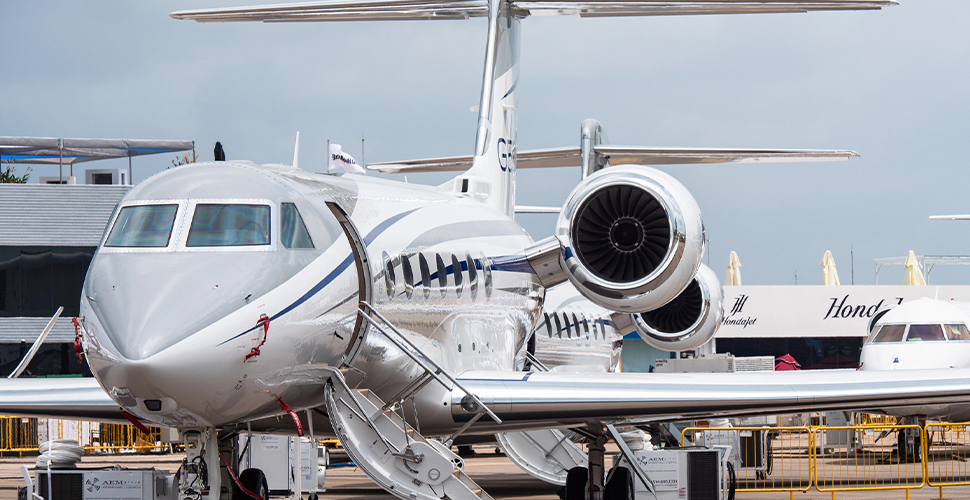
Airports are not one-size-fits-all gateways. A runway may be completely unsuitable for a large aircraft, even if it fits a small private jet easily. The aircraft length is not the only difference here. There’s more to it!
Where a plane can operate all depends on runway distance, pavement strength, wingspan, turning space, approach conditions, ground facilities, and aircraft performance. Private jets are in an advantageous position here.
The main reason is their design, which is suited for smaller operating environments. With this ability, private jets tend to have an increased access to regional and secondary airports, which larger airports cannot use routinely. Thus, different possibilities for route planning and point-to-point travel is created for private jets.
Aircraft Size Changes the Equation
One of the clearest differences between many private jets and large commercial aircraft is their physical size. You will find that a smaller aircraft has a shorter wingspan, lower overall weight, and more compact dimensions.
With such characteristics, it becomes possible for them to maneuver through airports that have narrower taxiways, smaller parking areas, and even less extensive ground infrastructure.
Substantially more room is needed by larger aircraft. Adequate clearance from buildings, signs, other aircraft, and airport equipment is necessary in the case of their wing. Besides, taxiways and turning areas must also have appropriate dimensions, which are appropriately capable of accommodating their size.
Thus, an airport needs more than a suitable runway. There is a need for the entire movement area to be compatible with the aircraft that’s using it.
Runway Length Matters
There is a need for enough runway for every aircraft to take off and land within the requisite operating limits. Nevertheless, the amount of runway needed varies significantly. In the case of many smaller private jets, comparatively shorter runways can also work appropriately.
With lower weight and different performance characteristics, these aircraft can accelerate during departure and slow down during landing, within distance which is unavailable to much larger aircraft.
Normally, large passenger aircraft requires longer distances, particularly, if they’re working with substantial passenger loads, baggage, and even fuel. There’s no fixed number for runway requirements for every flight.
Temperature, elevation, wind, runway condition, aircraft weight, and other operational factors can change the distance required. A runway that works comfortably on one flight may require different planning under another set of conditions.
Pavement Strength Is Equally Important
Only half of the runway story is conveyed by its length. There is a need for the runway to be able to support the weight of the aircraft. Particular loading conditions are used in the design and maintenance of airport pavements. Different demands are placed on the pavements by smaller jets, in comparison to a significantly heavier aircraft.
In some regional airports, you’ll find runways that are long enough for commercial aircraft, but their design doesn’t allow them to withstand their regular weight and loading characteristics.
The same issues are created by the taxiways and the parking areas. There is a need for the aircraft to travel from the runway to an appropriate parking spot. Thus, the pavement throughout the intended route should be suitable for this as well.
Therefore, facilities that are not suitable for larger commercial aircraft may be completely accessible for smaller private jets.
Smaller Wings Create More Options
Passengers rarely notice how wingspan affects the airport compatibility of an aircraft. Safety clearances surround taxiways. These are intended to keep the aircraft separated from obstacles and other traffic. Besides, there are dimensional limits in the case of parking stands as well.
Thus, a compact private jet can easily fit within infrastructure that’s designed around smaller aircraft. In the case of a larger airliner, the wingspan simply exceeds available clearances. Therefore, even if such a plane has the capability of landing in a small airport, it won’t be able to navigate the airport safely.
Another issue is created by the turning radius. The aircraft doesn’t pivot in place, making sufficient space essential in the case of taxiway intersections and turning areas. There is generally a need for lesser room for smaller aircraft to maneuver, which makes compact airport layout more practical.
Approach Conditions Affect Accessibility
An aircraft doesn’t simply point towards a runway and descends for reaching an airport. There is a need for pilots to consider surrounding terrain, available approach procedures, weather conditions, visibility, and even operational requirements.
In the case of some airports, their location in environments where approaches tend to be more restrictive that major transportation hubs can be an issue. Aircraft performance therefore influences whether such environments are suitable or not.
The built of some private aircraft is such that for them smaller or more demanding airports become practical under appropriate conditions. It doesn’t simply infer that every private jet can easily access smaller airports. There is a need to consider the diverse aircraft capabilities and operational requirements, which each flight must satisfy.
Ground Infrastructure Can Limit Aircraft
There is a need for considerable supporting infrastructure in the case of large aircraft. This makes large airports resemble complex ecosystems. Which aircraft an airport can accommodate can be strongly influenced by aspects like passenger boarding facilities, baggage systems, towing equipment, fueling capabilities, emergency services, maintenance resources, parking stands, and ground vehicles.
The infrastructure footprint in the case of smaller private jets is often lighter. Passengers can board directly from the apron and there’s no need for a large passenger bridge. Besides, smaller baggage volumes and aircraft servicing requirements are also a huge difference in this regard.
As a result, an airport does not necessarily need a large terminal complex to support suitable private jet movements.
Passenger Capacity Makes a Difference
In the case of large passenger aircraft, the designs revolve around volume. When you’re moving hundreds of passengers, you require an infrastructure that’s capable of handling check-in, security processes, baggage, boarding, arrivals, and ground transportation.
Far fewer passengers are carried by smaller private aircraft. With that difference, smaller aviation facilities become workable, basically because they don’t need the infrastructure necessary for large passenger flows.
This plain distinction is enough to indicate why some airports can support private aviation, even if they’re impractical for regular large-aircraft passenger operations. Flying is not always the limitation here. Sometimes, what happens before and after the aircraft leaves the runway can matter equally as much as well.
Weight Changes With Every Journey
Aircraft weight is dynamic in nature. The total operating weight is influenced by fuel, passengers, baggage, equipment, and other payload components. The runway distance increases with greater weight, which affects the overall performance calculations as well.
This holds particular importance in the case of smaller airports. While a private jet may be able to land at airport, with a larger fuel load, it may face restrictions when departing. Thus, it all depends on the aircraft and the route. These aspects must be considered by operators before adjusting fuel or payload planning.
Weather adds another variable. Higher temperatures can reduce aircraft performance, while airport elevation can also influence takeoff requirements. For this reason, airport accessibility must be evaluated for the specific flight rather than considered as a permanent yes-or-no characteristic.
Not Every Private Jet Has the Same Access
The phrase "private jet" covers aircraft with dramatically different sizes and capabilities.
Some are compact aircraft designed for shorter journeys and smaller facilities. Others approach the dimensions, weight, and operating requirements of larger passenger aircraft.
A large private jet may therefore face many of the same airport limitations affecting commercial aircraft.
Likewise, a small airport may have restrictions involving operating hours, noise procedures, weather conditions, available services, or aircraft categories.
Private aviation provides flexibility, but that flexibility always exists within operational boundaries.
Smaller Airports Can Change Route Planning
Access to smaller airports can influence the entire structure of a journey.
Instead of selecting only airports capable of supporting large passenger aircraft, travelers using suitable private jets may have a wider collection of regional or secondary airports available for consideration.
That can place the aircraft closer to a particular destination and create different options for organizing ground transportation and flight schedules.
However, the nearest airport is not automatically the appropriate one. Runway suitability, weather, fuel availability, operating restrictions, ground services, and aircraft performance all remain important.
The practical advantage comes from having additional possibilities rather than unrestricted access.
The Real Reason Comes Down to Compatibility
Private jets can use certain airports that larger aircraft cannot because aviation infrastructure is built around physical and operational limits.
Runway length matters, but so do pavement strength, wingspan, aircraft weight, taxiway geometry, parking space, approach conditions, and ground facilities.
Many private jets simply fit within a broader range of these limits.
Their smaller dimensions and different performance characteristics can make airports with more compact infrastructure usable. Larger aircraft require an operating environment capable of supporting greater weight, size, passenger volume, and ground-service demands.
Ultimately, airport access is a compatibility puzzle. When the aircraft's dimensions, performance, and operating requirements fit the airport's capabilities, a runway that looks surprisingly small on a map can become a practical gateway.